•  
Exhibition of China's Terracotta Warriors - Budapest

Exhibition of China's Terracotta Warriors - Budapest

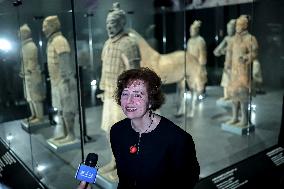
Curator Gyorgyi Fajcsak speaks during an interview with Xinhua at the opening ceremony of an exhibition of China's Terracotta Warriors in Budapest, Hungary, Nov. 27, 2025. The Museum of Fine Arts in Budapest on Thursday opened one of the most significant Chinese cultural exhibitions ever held in Hungary, presenting more than 150 ancient artworks from the Qin and Han dynasties, including ten original Terracotta Warriors. Titled "Civilization of the Qin and Han Dynasties - The First Chinese Emperor's Terracotta Warriors," the exhibition is jointly organized by the Museum of Fine Arts in Budapest and the Shaanxi Provincial Cultural Heritage Administration, and it will run for six months starting from Friday. TO GO WITH "Budapest museum unveils China's Terracotta Warriors" (Photo by David Balogh/Xinhua/ABACAPRESS.COM)

  •  
Exhibition of China's Terracotta Warriors - Budapest

Exhibition of China's Terracotta Warriors - Budapest

Laszlo Baan, director general of the Museum of Fine Arts, speaks during an interview with Xinhua at the opening ceremony of an exhibition of China's Terracotta Warriors in Budapest, Hungary, Nov. 27, 2025. The Museum of Fine Arts in Budapest on Thursday opened one of the most significant Chinese cultural exhibitions ever held in Hungary, presenting more than 150 ancient artworks from the Qin and Han dynasties, including ten original Terracotta Warriors. Titled "Civilization of the Qin and Han Dynasties - The First Chinese Emperor's Terracotta Warriors," the exhibition is jointly organized by the Museum of Fine Arts in Budapest and the Shaanxi Provincial Cultural Heritage Administration, and it will run for six months starting from Friday. TO GO WITH "Budapest museum unveils China's Terracotta Warriors" (Photo by David Balogh/Xinhua/ABACAPRESS.COM)

  •  
Exhibition of China's Terracotta Warriors - Budapest

Exhibition of China's Terracotta Warriors - Budapest

Laszlo Baan, director general of the Museum of Fine Arts, delivers a speech at the opening ceremony of an exhibition of China's Terracotta Warriors in Budapest, Hungary, Nov. 27, 2025. The Museum of Fine Arts in Budapest on Thursday opened one of the most significant Chinese cultural exhibitions ever held in Hungary, presenting more than 150 ancient artworks from the Qin and Han dynasties, including ten original Terracotta Warriors. Titled "Civilization of the Qin and Han Dynasties - The First Chinese Emperor's Terracotta Warriors," the exhibition is jointly organized by the Museum of Fine Arts in Budapest and the Shaanxi Provincial Cultural Heritage Administration, and it will run for six months starting from Friday. TO GO WITH "Budapest museum unveils China's Terracotta Warriors" (Photo by David Balogh/Xinhua/ABACAPRESS.COM)

  •  
Civilization of the Qin and Han Dynasties - Budapest

Civilization of the Qin and Han Dynasties - Budapest

Laszlo Baan, director general of the Museum of Fine Arts in Budapest, speaks during the opening ceremony of the exhibition "Civilization of the Qin and Han Dynasties - The First Chinese Emperor's Terracotta Warriors" in Budapest, Hungary, Nov. 27, 2025. The Museum of Fine Arts in Budapest on Thursday opened one of the most significant Chinese cultural exhibitions ever held in Hungary, presenting more than 150 ancient artworks from the Qin and Han dynasties (221 BC-220 AD), including ten original Terracotta Warriors. Titled "Civilization of the Qin and Han Dynasties - The First Chinese Emperor's Terracotta Warriors," the exhibition is jointly organized by the Museum of Fine Arts in Budapest and the Shaanxi Provincial Cultural Heritage Administration, and it will run for six months starting from Friday. Photo by David Balogh/Xinhua/ABACAPRESS.COM

  •  
Civilization of the Qin and Han Dynasties - Budapest

Civilization of the Qin and Han Dynasties - Budapest

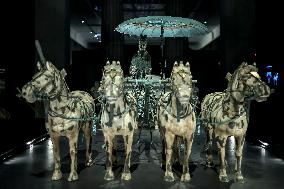
Exhibits are pictured at the exhibition "Civilization of the Qin and Han Dynasties - The First Chinese Emperor's Terracotta Warriors" at the Museum of Fine Arts in Budapest, Hungary, Nov. 27, 2025. The Museum of Fine Arts in Budapest on Thursday opened one of the most significant Chinese cultural exhibitions ever held in Hungary, presenting more than 150 ancient artworks from the Qin and Han dynasties (221 BC-220 AD), including ten original Terracotta Warriors. Titled "Civilization of the Qin and Han Dynasties - The First Chinese Emperor's Terracotta Warriors," the exhibition is jointly organized by the Museum of Fine Arts in Budapest and the Shaanxi Provincial Cultural Heritage Administration, and it will run for six months starting from Friday. Photo by David Balogh/Xinhua/ABACAPRESS.COM

  •  
Civilization of the Qin and Han Dynasties - Budapest

Civilization of the Qin and Han Dynasties - Budapest

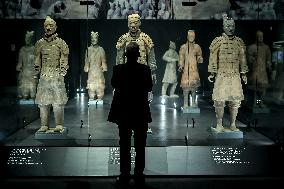
A visitor views exhibits at the exhibition "Civilization of the Qin and Han Dynasties - The First Chinese Emperor's Terracotta Warriors" at the Museum of Fine Arts in Budapest, Hungary, Nov. 27, 2025. The Museum of Fine Arts in Budapest on Thursday opened one of the most significant Chinese cultural exhibitions ever held in Hungary, presenting more than 150 ancient artworks from the Qin and Han dynasties (221 BC-220 AD), including ten original Terracotta Warriors. Titled "Civilization of the Qin and Han Dynasties - The First Chinese Emperor's Terracotta Warriors," the exhibition is jointly organized by the Museum of Fine Arts in Budapest and the Shaanxi Provincial Cultural Heritage Administration, and it will run for six months starting from Friday. Photo by David Balogh/Xinhua/ABACAPRESS.COM

  •  
Civilization of the Qin and Han Dynasties - Budapest

Civilization of the Qin and Han Dynasties - Budapest

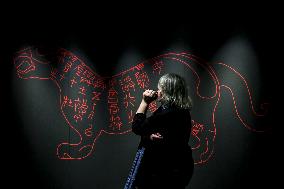
A woman visits the exhibition "Civilization of the Qin and Han Dynasties - The First Chinese Emperor's Terracotta Warriors" at the Museum of Fine Arts in Budapest, Hungary, Nov. 27, 2025. The Museum of Fine Arts in Budapest on Thursday opened one of the most significant Chinese cultural exhibitions ever held in Hungary, presenting more than 150 ancient artworks from the Qin and Han dynasties (221 BC-220 AD), including ten original Terracotta Warriors. Titled "Civilization of the Qin and Han Dynasties - The First Chinese Emperor's Terracotta Warriors," the exhibition is jointly organized by the Museum of Fine Arts in Budapest and the Shaanxi Provincial Cultural Heritage Administration, and it will run for six months starting from Friday. Photo by David Balogh/Xinhua/ABACAPRESS.COM

  •  
Civilization of the Qin and Han Dynasties - Budapest

Civilization of the Qin and Han Dynasties - Budapest

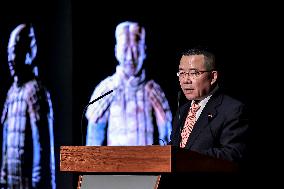
Chinese Ambassador to Hungary Gong Tao speaks during the opening ceremony of the exhibition "Civilization of the Qin and Han Dynasties - The First Chinese Emperor's Terracotta Warriors" in Budapest, Hungary, Nov. 27, 2025. The Museum of Fine Arts in Budapest on Thursday opened one of the most significant Chinese cultural exhibitions ever held in Hungary, presenting more than 150 ancient artworks from the Qin and Han dynasties (221 BC-220 AD), including ten original Terracotta Warriors. Titled "Civilization of the Qin and Han Dynasties - The First Chinese Emperor's Terracotta Warriors," the exhibition is jointly organized by the Museum of Fine Arts in Budapest and the Shaanxi Provincial Cultural Heritage Administration, and it will run for six months starting from Friday. Photo by David Balogh/Xinhua/ABACAPRESS.COM

  •  
Civilization of the Qin and Han Dynasties - Budapest

Civilization of the Qin and Han Dynasties - Budapest

Hungarian President Tamas Sulyok speaks during the opening ceremony of the exhibition "Civilization of the Qin and Han Dynasties - The First Chinese Emperor's Terracotta Warriors" in Budapest, Hungary, Nov. 27, 2025. The Museum of Fine Arts in Budapest on Thursday opened one of the most significant Chinese cultural exhibitions ever held in Hungary, presenting more than 150 ancient artworks from the Qin and Han dynasties (221 BC-220 AD), including ten original Terracotta Warriors. Titled "Civilization of the Qin and Han Dynasties - The First Chinese Emperor's Terracotta Warriors," the exhibition is jointly organized by the Museum of Fine Arts in Budapest and the Shaanxi Provincial Cultural Heritage Administration, and it will run for six months starting from Friday. Photo by David Balogh/Xinhua/ABACAPRESS.COM

  •  
Civilization of the Qin and Han Dynasties - Budapest

Civilization of the Qin and Han Dynasties - Budapest

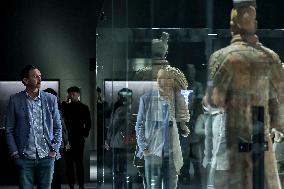
A visitor views exhibits at the exhibition "Civilization of the Qin and Han Dynasties - The First Chinese Emperor's Terracotta Warriors" at the Museum of Fine Arts in Budapest, Hungary, Nov. 27, 2025. The Museum of Fine Arts in Budapest on Thursday opened one of the most significant Chinese cultural exhibitions ever held in Hungary, presenting more than 150 ancient artworks from the Qin and Han dynasties (221 BC-220 AD), including ten original Terracotta Warriors. Titled "Civilization of the Qin and Han Dynasties - The First Chinese Emperor's Terracotta Warriors," the exhibition is jointly organized by the Museum of Fine Arts in Budapest and the Shaanxi Provincial Cultural Heritage Administration, and it will run for six months starting from Friday. Photo by David Balogh/Xinhua/ABACAPRESS.COM

  •  
Civilization of the Qin and Han Dynasties - Budapest

Civilization of the Qin and Han Dynasties - Budapest

A visitor views exhibits at the exhibition "Civilization of the Qin and Han Dynasties - The First Chinese Emperor's Terracotta Warriors" at the Museum of Fine Arts in Budapest, Hungary, Nov. 27, 2025. The Museum of Fine Arts in Budapest on Thursday opened one of the most significant Chinese cultural exhibitions ever held in Hungary, presenting more than 150 ancient artworks from the Qin and Han dynasties (221 BC-220 AD), including ten original Terracotta Warriors. Titled "Civilization of the Qin and Han Dynasties - The First Chinese Emperor's Terracotta Warriors," the exhibition is jointly organized by the Museum of Fine Arts in Budapest and the Shaanxi Provincial Cultural Heritage Administration, and it will run for six months starting from Friday. Photo by David Balogh/Xinhua/ABACAPRESS.COM

  •  
Civilization of the Qin and Han Dynasties - Budapest

Civilization of the Qin and Han Dynasties - Budapest

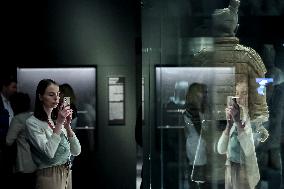
A visitor takes photos of exhibits at the exhibition "Civilization of the Qin and Han Dynasties - The First Chinese Emperor's Terracotta Warriors" at the Museum of Fine Arts in Budapest, Hungary, Nov. 27, 2025. The Museum of Fine Arts in Budapest on Thursday opened one of the most significant Chinese cultural exhibitions ever held in Hungary, presenting more than 150 ancient artworks from the Qin and Han dynasties (221 BC-220 AD), including ten original Terracotta Warriors. Titled "Civilization of the Qin and Han Dynasties - The First Chinese Emperor's Terracotta Warriors," the exhibition is jointly organized by the Museum of Fine Arts in Budapest and the Shaanxi Provincial Cultural Heritage Administration, and it will run for six months starting from Friday. Photo by David Balogh/Xinhua/ABACAPRESS.COM

  •  
Civilization of the Qin and Han Dynasties - Budapest

Civilization of the Qin and Han Dynasties - Budapest

A visitor takes photos of exhibits at the exhibition "Civilization of the Qin and Han Dynasties - The First Chinese Emperor's Terracotta Warriors" at the Museum of Fine Arts in Budapest, Hungary, Nov. 27, 2025. The Museum of Fine Arts in Budapest on Thursday opened one of the most significant Chinese cultural exhibitions ever held in Hungary, presenting more than 150 ancient artworks from the Qin and Han dynasties (221 BC-220 AD), including ten original Terracotta Warriors. Titled "Civilization of the Qin and Han Dynasties - The First Chinese Emperor's Terracotta Warriors," the exhibition is jointly organized by the Museum of Fine Arts in Budapest and the Shaanxi Provincial Cultural Heritage Administration, and it will run for six months starting from Friday. Photo by David Balogh/Xinhua/ABACAPRESS.COM

  •  
Grand Egyptian Museum Opening - Giza

Grand Egyptian Museum Opening - Giza

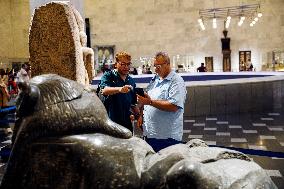
Tourists stand around the colossus of ancient Egyptian pharaoh Ramses II at the Grand Egyptian Museum in Giza, Egypt, on November 4, 2025. The Grand Egyptian Museum (GEM) , the world's largest museum dedicated to a single civilization, opened to the public on Tuesday. Photo by Xinhua/Ahmed Gomaa/ABACAPRESS.COM

  •  
Cairo Launches Hieroglyph Translation App - Egypt

Cairo Launches Hieroglyph Translation App - Egypt

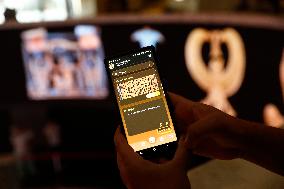
Egyptian app developer Ahmed El-Kholy tests the hieroglyphic translation function of his app Manetho on an artifact at the National Museum of Egyptian Civilization in Cairo, Egypt, Aug. 7, 2025. TO GO WITH "Feature: Egyptian startup brings ancient hieroglyphs to life with AI-powered app" Photo by Ahmed Gomaa/Xinhua/ABACAPRESS.COM

  •  
Cairo Launches Hieroglyph Translation App - Egypt

Cairo Launches Hieroglyph Translation App - Egypt

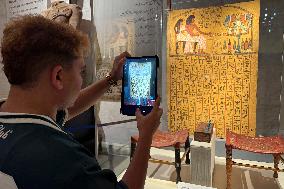
Egyptian app developer Ahmed El-Kholy tests the augmented reality (AR) function of his app Manetho on an artifact at the National Museum of Egyptian Civilization in Cairo, Egypt, Aug. 7, 2025. TO GO WITH "Feature: Egyptian startup brings ancient hieroglyphs to life with AI-powered app" Photo by Ahmed Gomaa/Xinhua/ABACAPRESS.COM

  •  
Cairo Launches Hieroglyph Translation App - Egypt

Cairo Launches Hieroglyph Translation App - Egypt

Egyptian app developer Ahmed El-Kholy (L) explains the use of app Manetho to a tourist at the National Museum of Egyptian Civilization in Cairo, Egypt, Aug. 7, 2025. TO GO WITH "Feature: Egyptian startup brings ancient hieroglyphs to life with AI-powered app" Photo by Ahmed Gomaa/Xinhua/ABACAPRESS.COM

  •  
Cairo Launches Hieroglyph Translation App - Egypt

Cairo Launches Hieroglyph Translation App - Egypt

Egyptian app developer Ahmed El-Kholy tests the hieroglyphic translation function of his app Manetho on an artifact at the National Museum of Egyptian Civilization in Cairo, Egypt, Aug. 7, 2025. TO GO WITH "Feature: Egyptian startup brings ancient hieroglyphs to life with AI-powered app" Photo by Ahmed Gomaa/Xinhua/ABACAPRESS.COM

  •  
Ancient Egyptian Civilization Exhibition Cultural Creation Sales

Ancient Egyptian Civilization Exhibition Cultural Creation Sales

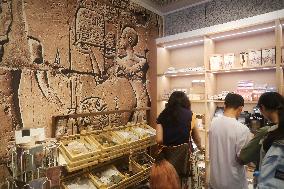
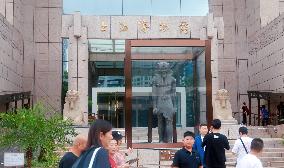
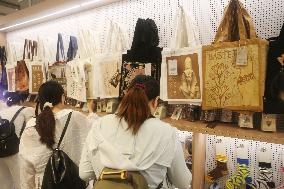
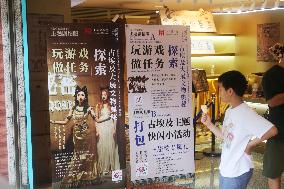
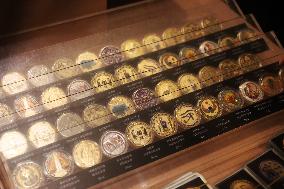
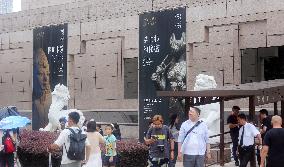
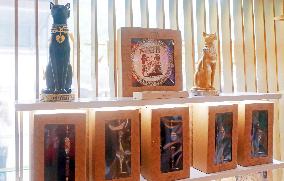
SHANGHAI, CHINA - JULY 26, 2024 - (FILE) Visitors visit an exhibition themed On top of the Pyramid: The Civilization of Ancient Egyptian in Shanghai, China, July 26, 2024.

  •  
Ancient Egyptian Civilization Exhibition Cultural Creation Sales

Ancient Egyptian Civilization Exhibition Cultural Creation Sales

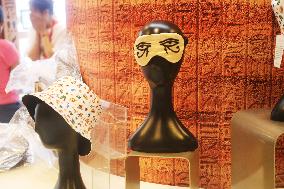
SHANGHAI, CHINA - JULY 26, 2024 - (FILE) Visitors visit an exhibition themed On top of the Pyramid: The Civilization of Ancient Egyptian in Shanghai, China, July 26, 2024.

  •  
Ancient Egyptian Civilization Exhibition Cultural Creation Sales

Ancient Egyptian Civilization Exhibition Cultural Creation Sales

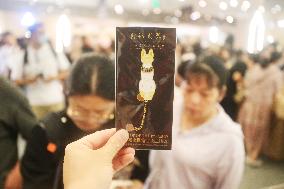
SHANGHAI, CHINA - JULY 26, 2024 - (FILE) Visitors visit an exhibition themed On top of the Pyramid: The Civilization of Ancient Egyptian in Shanghai, China, July 26, 2024.

  •  
Ancient Egyptian Civilization Exhibition Cultural Creation Sales

Ancient Egyptian Civilization Exhibition Cultural Creation Sales

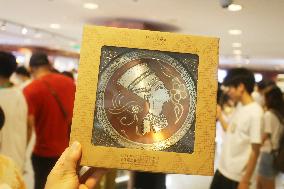
SHANGHAI, CHINA - JULY 26, 2024 - (FILE) Visitors visit an exhibition themed On top of the Pyramid: The Civilization of Ancient Egyptian in Shanghai, China, July 26, 2024.

  •  
Ancient Egyptian Civilization Exhibition Cultural Creation Sales

Ancient Egyptian Civilization Exhibition Cultural Creation Sales

SHANGHAI, CHINA - JULY 26, 2024 - (FILE) Visitors visit an exhibition themed On top of the Pyramid: The Civilization of Ancient Egyptian in Shanghai, China, July 26, 2024.

  •  
Ancient Egyptian Civilization Exhibition Cultural Creation Sales

Ancient Egyptian Civilization Exhibition Cultural Creation Sales

SHANGHAI, CHINA - JULY 26, 2024 - (FILE) Visitors visit an exhibition themed On top of the Pyramid: The Civilization of Ancient Egyptian in Shanghai, China, July 26, 2024.

  •  
Ancient Egyptian Civilization Exhibition Cultural Creation Sales

Ancient Egyptian Civilization Exhibition Cultural Creation Sales

SHANGHAI, CHINA - JULY 26, 2024 - (FILE) Visitors visit an exhibition themed On top of the Pyramid: The Civilization of Ancient Egyptian in Shanghai, China, July 26, 2024.

  •  
Ancient Egyptian Civilization Exhibition Cultural Creation Sales

Ancient Egyptian Civilization Exhibition Cultural Creation Sales

SHANGHAI, CHINA - JULY 26, 2024 - (FILE) Visitors visit an exhibition themed On top of the Pyramid: The Civilization of Ancient Egyptian in Shanghai, China, July 26, 2024.

  •  
Ancient Egyptian Civilization Exhibition Cultural Creation Sales

Ancient Egyptian Civilization Exhibition Cultural Creation Sales

SHANGHAI, CHINA - JULY 26, 2024 - (FILE) Visitors visit an exhibition themed On top of the Pyramid: The Civilization of Ancient Egyptian in Shanghai, China, July 26, 2024.

  •  
Ancient Egyptian Civilization Exhibition Cultural Creation Sales

Ancient Egyptian Civilization Exhibition Cultural Creation Sales

SHANGHAI, CHINA - JULY 26, 2024 - (FILE) Visitors visit an exhibition themed On top of the Pyramid: The Civilization of Ancient Egyptian in Shanghai, China, July 26, 2024.

  •  
Ancient Egyptian Civilization Exhibition Cultural Creation Sales

Ancient Egyptian Civilization Exhibition Cultural Creation Sales

SHANGHAI, CHINA - JULY 26, 2024 - (FILE) Visitors visit an exhibition themed On top of the Pyramid: The Civilization of Ancient Egyptian in Shanghai, China, July 26, 2024.

  •  
Ancient Egyptian Civilization Exhibition Cultural Creation Sales

Ancient Egyptian Civilization Exhibition Cultural Creation Sales

SHANGHAI, CHINA - JULY 26, 2024 - (FILE) Visitors visit an exhibition themed On top of the Pyramid: The Civilization of Ancient Egyptian in Shanghai, China, July 26, 2024.

  •  
Ancient Egyptian Civilization Exhibition Cultural Creation Sales

Ancient Egyptian Civilization Exhibition Cultural Creation Sales

SHANGHAI, CHINA - JULY 26, 2024 - (FILE) Visitors visit an exhibition themed On top of the Pyramid: The Civilization of Ancient Egyptian in Shanghai, China, July 26, 2024.

  •  
Ancient Egyptian Civilization Exhibition Cultural Creation Sales

Ancient Egyptian Civilization Exhibition Cultural Creation Sales

SHANGHAI, CHINA - JULY 26, 2024 - (FILE) Visitors visit an exhibition themed On top of the Pyramid: The Civilization of Ancient Egyptian in Shanghai, China, July 26, 2024.

  •  
Ancient Egyptian Civilization Exhibition Cultural Creation Sales

Ancient Egyptian Civilization Exhibition Cultural Creation Sales

SHANGHAI, CHINA - JULY 26, 2024 - (FILE) Visitors visit an exhibition themed On top of the Pyramid: The Civilization of Ancient Egyptian in Shanghai, China, July 26, 2024.

  •  
Ancient Egyptian Civilization Exhibition Cultural Creation Sales

Ancient Egyptian Civilization Exhibition Cultural Creation Sales

SHANGHAI, CHINA - JULY 26, 2024 - (FILE) Visitors visit an exhibition themed On top of the Pyramid: The Civilization of Ancient Egyptian in Shanghai, China, July 26, 2024.

  •  
Ancient Egyptian Civilization Exhibition Cultural Creation Sales

Ancient Egyptian Civilization Exhibition Cultural Creation Sales

SHANGHAI, CHINA - JULY 26, 2024 - (FILE) Visitors visit an exhibition themed On top of the Pyramid: The Civilization of Ancient Egyptian in Shanghai, China, July 26, 2024.

  •  
Ancient Egyptian Civilization Exhibition Cultural Creation Sales

Ancient Egyptian Civilization Exhibition Cultural Creation Sales

SHANGHAI, CHINA - JULY 26, 2024 - (FILE) Visitors visit an exhibition themed On top of the Pyramid: The Civilization of Ancient Egyptian in Shanghai, China, July 26, 2024.

  •  
Ancient Egyptian Civilization Exhibition Cultural Creation Sales

Ancient Egyptian Civilization Exhibition Cultural Creation Sales

SHANGHAI, CHINA - JULY 26, 2024 - (FILE) Visitors visit an exhibition themed On top of the Pyramid: The Civilization of Ancient Egyptian in Shanghai, China, July 26, 2024.

  •  
CHINA-BEIJING-CENTRAL AXIS-LISTED UNESCO WORLD HERITAGE (CN)

CHINA-BEIJING-CENTRAL AXIS-LISTED UNESCO WORLD HERITAGE (CN)

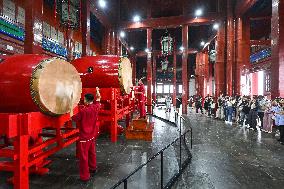
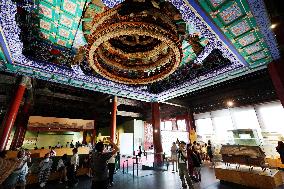
(240727) -- BEIJING, July 27, 2024 Photo by Xinhua/ABACAPRESS.COM) -- Tourists watch a drum performance at the Drum Tower in Beijing, capital of China, July 16, 2024. The United Nations Educational, Scientific and Cultural Organization (UNESCO) on Saturday announced the inclusion of the Beijing Central Axis: A Building Ensemble Exhibiting the Ideal Order of the Chinese Capital, into its world heritage list. So far, China has a total of 59 World Heritage Sites. Beijing Central Axis, initially established in the 13th century and formed in the 16th century, runs through the old city of Beijing from north to south. It has become the longest urban axis in the world today, spanning 7.8 kilometers. The heritage area of the Beijing Central Axis covers 589 hectares, with a buffer zone of 4,542 hectares. Its location, layout, urban form, and design reflect the ancient Chinese tradition of urban planning, serving as an important emblem that highlights the distinctive characteristics of Chinese civilization. Photo by Xin

  •  
CHINA-BEIJING-CENTRAL AXIS-LISTED UNESCO WORLD HERITAGE (CN)

CHINA-BEIJING-CENTRAL AXIS-LISTED UNESCO WORLD HERITAGE (CN)

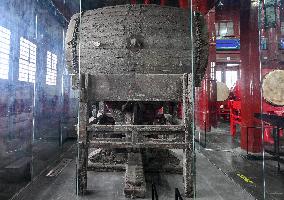
(240727) -- BEIJING, July 27, 2024 Photo by Xinhua/ABACAPRESS.COM) -- An ancient drum is pictured in the Drum Tower in Beijing, capital of China, July 16, 2024. The United Nations Educational, Scientific and Cultural Organization (UNESCO) on Saturday announced the inclusion of the Beijing Central Axis: A Building Ensemble Exhibiting the Ideal Order of the Chinese Capital, into its world heritage list. So far, China has a total of 59 World Heritage Sites. Beijing Central Axis, initially established in the 13th century and formed in the 16th century, runs through the old city of Beijing from north to south. It has become the longest urban axis in the world today, spanning 7.8 kilometers. The heritage area of the Beijing Central Axis covers 589 hectares, with a buffer zone of 4,542 hectares. Its location, layout, urban form, and design reflect the ancient Chinese tradition of urban planning, serving as an important emblem that highlights the distinctive characteristics of Chinese civilization. Photo by Xinhua/AB

  •  
CHINA-BEIJING-CENTRAL AXIS-LISTED UNESCO WORLD HERITAGE (CN)

CHINA-BEIJING-CENTRAL AXIS-LISTED UNESCO WORLD HERITAGE (CN)

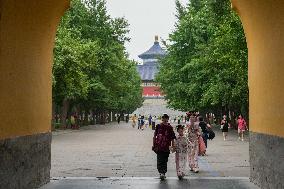
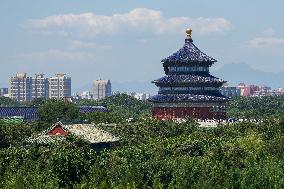
(240727) -- BEIJING, July 27, 2024 Photo by Xinhua/ABACAPRESS.COM) -- Tourists visit the Temple of Heaven in Beijing, capital of China, July 19, 2024. The United Nations Educational, Scientific and Cultural Organization (UNESCO) on Saturday announced the inclusion of the Beijing Central Axis: A Building Ensemble Exhibiting the Ideal Order of the Chinese Capital, into its world heritage list. So far, China has a total of 59 World Heritage Sites. Beijing Central Axis, initially established in the 13th century and formed in the 16th century, runs through the old city of Beijing from north to south. It has become the longest urban axis in the world today, spanning 7.8 kilometers. The heritage area of the Beijing Central Axis covers 589 hectares, with a buffer zone of 4,542 hectares. Its location, layout, urban form, and design reflect the ancient Chinese tradition of urban planning, serving as an important emblem that highlights the distinctive characteristics of Chinese civilization. Photo by Xinhua/ABACAPRESS.C

  •  
CHINA-BEIJING-CENTRAL AXIS-LISTED UNESCO WORLD HERITAGE (CN)

CHINA-BEIJING-CENTRAL AXIS-LISTED UNESCO WORLD HERITAGE (CN)

(240727) -- BEIJING, July 27, 2024 Photo by Xinhua/ABACAPRESS.COM) -- Tourists visit the Temple of Heaven in Beijing, capital of China, June 25, 2024. The United Nations Educational, Scientific and Cultural Organization (UNESCO) on Saturday announced the inclusion of the Beijing Central Axis: A Building Ensemble Exhibiting the Ideal Order of the Chinese Capital, into its world heritage list. So far, China has a total of 59 World Heritage Sites. Beijing Central Axis, initially established in the 13th century and formed in the 16th century, runs through the old city of Beijing from north to south. It has become the longest urban axis in the world today, spanning 7.8 kilometers. The heritage area of the Beijing Central Axis covers 589 hectares, with a buffer zone of 4,542 hectares. Its location, layout, urban form, and design reflect the ancient Chinese tradition of urban planning, serving as an important emblem that highlights the distinctive characteristics of Chinese civilization. Photo by Xinhua/ABACAPRESS.C

  •  
CHINA-BEIJING-CENTRAL AXIS-LISTED UNESCO WORLD HERITAGE (CN)

CHINA-BEIJING-CENTRAL AXIS-LISTED UNESCO WORLD HERITAGE (CN)

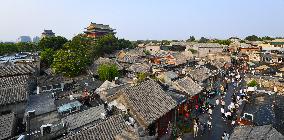
(240727) -- BEIJING, July 27, 2024 Photo by Xinhua/ABACAPRESS.COM) -- This photo taken on July 10, 2024 shows a view of the Bell and Drum Towers in Beijing, capital of China. The United Nations Educational, Scientific and Cultural Organization (UNESCO) on Saturday announced the inclusion of the Beijing Central Axis: A Building Ensemble Exhibiting the Ideal Order of the Chinese Capital, into its world heritage list. So far, China has a total of 59 World Heritage Sites. Beijing Central Axis, initially established in the 13th century and formed in the 16th century, runs through the old city of Beijing from north to south. It has become the longest urban axis in the world today, spanning 7.8 kilometers. The heritage area of the Beijing Central Axis covers 589 hectares, with a buffer zone of 4,542 hectares. Its location, layout, urban form, and design reflect the ancient Chinese tradition of urban planning, serving as an important emblem that highlights the distinctive characteristics of Chinese civilization. Phot

  •  
CHINA-BEIJING-CENTRAL AXIS-LISTED UNESCO WORLD HERITAGE (CN)

CHINA-BEIJING-CENTRAL AXIS-LISTED UNESCO WORLD HERITAGE (CN)

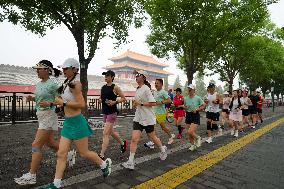
(240727) -- BEIJING, July 27, 2024 Photo by Xinhua/ABACAPRESS.COM) -- Joggers run past the Shenwu Gate of the Forbidden City in Beijing, capital of China, June 22, 2024. The United Nations Educational, Scientific and Cultural Organization (UNESCO) on Saturday announced the inclusion of the Beijing Central Axis: A Building Ensemble Exhibiting the Ideal Order of the Chinese Capital, into its world heritage list. So far, China has a total of 59 World Heritage Sites. Beijing Central Axis, initially established in the 13th century and formed in the 16th century, runs through the old city of Beijing from north to south. It has become the longest urban axis in the world today, spanning 7.8 kilometers. The heritage area of the Beijing Central Axis covers 589 hectares, with a buffer zone of 4,542 hectares. Its location, layout, urban form, and design reflect the ancient Chinese tradition of urban planning, serving as an important emblem that highlights the distinctive characteristics of Chinese civilization. Photo by

  •  
CHINA-BEIJING-CENTRAL AXIS-LISTED UNESCO WORLD HERITAGE (CN)

CHINA-BEIJING-CENTRAL AXIS-LISTED UNESCO WORLD HERITAGE (CN)

(240727) -- BEIJING, July 27, 2024 Photo by Xinhua/ABACAPRESS.COM) -- Tourists visit Taisui hall of the Altar of the God of Agriculture in Beijing, capital of China, July 17, 2024. The United Nations Educational, Scientific and Cultural Organization (UNESCO) on Saturday announced the inclusion of the Beijing Central Axis: A Building Ensemble Exhibiting the Ideal Order of the Chinese Capital, into its world heritage list. So far, China has a total of 59 World Heritage Sites. Beijing Central Axis, initially established in the 13th century and formed in the 16th century, runs through the old city of Beijing from north to south. It has become the longest urban axis in the world today, spanning 7.8 kilometers. The heritage area of the Beijing Central Axis covers 589 hectares, with a buffer zone of 4,542 hectares. Its location, layout, urban form, and design reflect the ancient Chinese tradition of urban planning, serving as an important emblem that highlights the distinctive characteristics of Chinese civilization

  •  
CHINA-BEIJING-CENTRAL AXIS-LISTED UNESCO WORLD HERITAGE (CN)

CHINA-BEIJING-CENTRAL AXIS-LISTED UNESCO WORLD HERITAGE (CN)

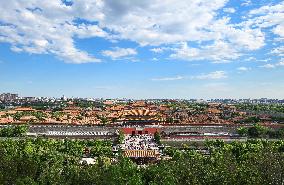
(240727) -- BEIJING, July 27, 2024 Photo by Xinhua/ABACAPRESS.COM) -- This photo taken on May 31, 2024 shows a view of the Forbidden City in Beijing, capital of China. The United Nations Educational, Scientific and Cultural Organization (UNESCO) on Saturday announced the inclusion of the Beijing Central Axis: A Building Ensemble Exhibiting the Ideal Order of the Chinese Capital, into its world heritage list. So far, China has a total of 59 World Heritage Sites. Beijing Central Axis, initially established in the 13th century and formed in the 16th century, runs through the old city of Beijing from north to south. It has become the longest urban axis in the world today, spanning 7.8 kilometers. The heritage area of the Beijing Central Axis covers 589 hectares, with a buffer zone of 4,542 hectares. Its location, layout, urban form, and design reflect the ancient Chinese tradition of urban planning, serving as an important emblem that highlights the distinctive characteristics of Chinese civilization. Photo by Xi

  •  
CHINA-BEIJING-CENTRAL AXIS-LISTED UNESCO WORLD HERITAGE (CN)

CHINA-BEIJING-CENTRAL AXIS-LISTED UNESCO WORLD HERITAGE (CN)

(240727) -- BEIJING, July 27, 2024 Photo by Xinhua/ABACAPRESS.COM) -- Citizens enjoy leisure time at Yongdingmen Park in Beijing, capital of China, July 17, 2024. The United Nations Educational, Scientific and Cultural Organization (UNESCO) on Saturday announced the inclusion of the Beijing Central Axis: A Building Ensemble Exhibiting the Ideal Order of the Chinese Capital, into its world heritage list. So far, China has a total of 59 World Heritage Sites. Beijing Central Axis, initially established in the 13th century and formed in the 16th century, runs through the old city of Beijing from north to south. It has become the longest urban axis in the world today, spanning 7.8 kilometers. The heritage area of the Beijing Central Axis covers 589 hectares, with a buffer zone of 4,542 hectares. Its location, layout, urban form, and design reflect the ancient Chinese tradition of urban planning, serving as an important emblem that highlights the distinctive characteristics of Chinese civilization. Photo by Xinhua/

  •  
CHINA-BEIJING-CENTRAL AXIS-LISTED UNESCO WORLD HERITAGE (CN)

CHINA-BEIJING-CENTRAL AXIS-LISTED UNESCO WORLD HERITAGE (CN)

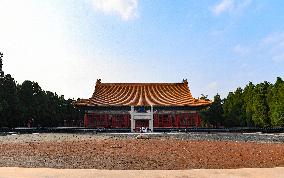
(240727) -- BEIJING, July 27, 2024 Photo by Xinhua/ABACAPRESS.COM) -- This photo taken on July 16, 2024 shows a view of the Altar of Land and Grain in Beijing, capital of China. The United Nations Educational, Scientific and Cultural Organization (UNESCO) on Saturday announced the inclusion of the Beijing Central Axis: A Building Ensemble Exhibiting the Ideal Order of the Chinese Capital, into its world heritage list. So far, China has a total of 59 World Heritage Sites. Beijing Central Axis, initially established in the 13th century and formed in the 16th century, runs through the old city of Beijing from north to south. It has become the longest urban axis in the world today, spanning 7.8 kilometers. The heritage area of the Beijing Central Axis covers 589 hectares, with a buffer zone of 4,542 hectares. Its location, layout, urban form, and design reflect the ancient Chinese tradition of urban planning, serving as an important emblem that highlights the distinctive characteristics of Chinese civilization. P

  •  
CHINA-BEIJING-CENTRAL AXIS-LISTED UNESCO WORLD HERITAGE (CN)

CHINA-BEIJING-CENTRAL AXIS-LISTED UNESCO WORLD HERITAGE (CN)

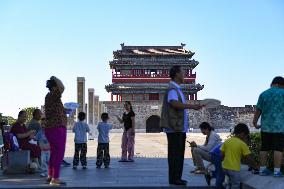
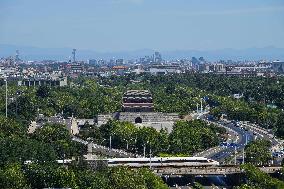
(240727) -- BEIJING, July 27, 2024 Photo by Xinhua/ABACAPRESS.COM) -- A bullet train runs past Yongdingmen Gate in Beijing, capital of China, July 18, 2024. The United Nations Educational, Scientific and Cultural Organization (UNESCO) on Saturday announced the inclusion of the Beijing Central Axis: A Building Ensemble Exhibiting the Ideal Order of the Chinese Capital, into its world heritage list. So far, China has a total of 59 World Heritage Sites. Beijing Central Axis, initially established in the 13th century and formed in the 16th century, runs through the old city of Beijing from north to south. It has become the longest urban axis in the world today, spanning 7.8 kilometers. The heritage area of the Beijing Central Axis covers 589 hectares, with a buffer zone of 4,542 hectares. Its location, layout, urban form, and design reflect the ancient Chinese tradition of urban planning, serving as an important emblem that highlights the distinctive characteristics of Chinese civilization. Photo by Xinhua/ABACAP

  •  
CHINA-BEIJING-CENTRAL AXIS-LISTED UNESCO WORLD HERITAGE (CN)

CHINA-BEIJING-CENTRAL AXIS-LISTED UNESCO WORLD HERITAGE (CN)

(240727) -- BEIJING, July 27, 2024 Photo by Xinhua/ABACAPRESS.COM) -- Joggers run on the Wanning Bridge in Beijing, capital of China, June 22, 2024. The United Nations Educational, Scientific and Cultural Organization (UNESCO) on Saturday announced the inclusion of the Beijing Central Axis: A Building Ensemble Exhibiting the Ideal Order of the Chinese Capital, into its world heritage list. So far, China has a total of 59 World Heritage Sites. Beijing Central Axis, initially established in the 13th century and formed in the 16th century, runs through the old city of Beijing from north to south. It has become the longest urban axis in the world today, spanning 7.8 kilometers. The heritage area of the Beijing Central Axis covers 589 hectares, with a buffer zone of 4,542 hectares. Its location, layout, urban form, and design reflect the ancient Chinese tradition of urban planning, serving as an important emblem that highlights the distinctive characteristics of Chinese civilization. Photo by Xinhua/ABACAPRESS.COM

  •  
CHINA-BEIJING-CENTRAL AXIS-LISTED UNESCO WORLD HERITAGE (CN)

CHINA-BEIJING-CENTRAL AXIS-LISTED UNESCO WORLD HERITAGE (CN)

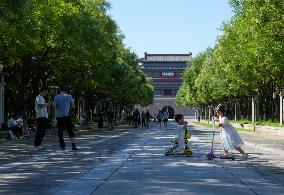
(240727) -- BEIJING, July 27, 2024 Photo by Xinhua/ABACAPRESS.COM) -- Tourists visit Yongdingmen Park in Beijing, capital of China, July 18, 2024. The United Nations Educational, Scientific and Cultural Organization (UNESCO) on Saturday announced the inclusion of the Beijing Central Axis: A Building Ensemble Exhibiting the Ideal Order of the Chinese Capital, into its world heritage list. So far, China has a total of 59 World Heritage Sites. Beijing Central Axis, initially established in the 13th century and formed in the 16th century, runs through the old city of Beijing from north to south. It has become the longest urban axis in the world today, spanning 7.8 kilometers. The heritage area of the Beijing Central Axis covers 589 hectares, with a buffer zone of 4,542 hectares. Its location, layout, urban form, and design reflect the ancient Chinese tradition of urban planning, serving as an important emblem that highlights the distinctive characteristics of Chinese civilization. Photo by Xinhua/ABACAPRESS.COM/J

  • Main
  • Top
  • Editorial
  • Creative
  • About Us
  • About ILG
  • Terms of use
  • Company
  • BEHIND
  • Price List
  • Single Plan
  • Monthly Plan
  • Services
  • Shooting
  • Rights Clearance
  • Support
  • FAQ
  • How To Buy
  • Contact Us
  • Become a Partner

© KYODO NEWS IMAGES INC

All Rights Reserved.

  • Editorial
  • Olympics
  • News
  • Sports
  • Japan
  • Tech
  • Royal
  • Disaster
  • NorthKorea
  • Old Japan
  • SNS

  • Creative
  • Food
  • Japan
  • Landscape
  • Animal
  • Popular
  • #Ukraine
  • #China
  • #coronavirus
  • #N. Korea
  • #Thailand
  • #Russia
  • #Ukraine
  • #China
  • #coronavirus
  • #N. Korea
  • #Thailand
  • #Russia
  • Food
  • Japan
  • Landscape
  • Animal
  • Olympics
  • News
  • Sports
  • Japan
  • Tech
  • Royal
  • Disaster
  • NorthKorea
  • Old Japan
  • SNS